



Centro de Noticias
Published: 2026-06-30 10:41:00 Source: Selead Furniture Co,. Ltd.
Key Takeaway: A recycling bin in the UK is defined by the waste stream it collects — not by its colour. With the Simpler Recycling framework now in force across England, most households need four separate containers: general waste, paper and card, dry recyclables, and food waste. That means three to five bins per household sitting at the kerbside — and a growing need for secure, weather-resistant outdoor bin storage that keeps recycling organised, pest-free, and compliant with council rules. A well-designed metal bin enclosure is not just about appearance; it is the practical infrastructure that makes multi-stream recycling work at home.
Here is a fact that surprises many people moving to a new area of the UK: the blue recycling bin you used in Manchester might be a general waste bin in Birmingham. There is no national standard for bin colours in the United Kingdom, which means that over 300 local authorities each define their own system. For homeowners, renters, and property managers, the seemingly simple question "what is a recycling bin" opens into a wider set of practical concerns — how many bins are needed, what happens if the wrong item goes in, and most critically, where all these containers live between collections.
This guide explains everything from bin types and colour confusion to the 2026 recycling reforms and why a durable outdoor bin enclosure is becoming an essential part of any household's waste management setup.
A recycling bin is a container designated by a local council for the collection of recyclable household materials. It is part of a household waste management system that separates materials for reprocessing rather than landfill or incineration. In the UK, the common materials accepted in recycling bins include paper and cardboard, plastic bottles and containers, metal cans and tins, aluminium foil, glass bottles and jars, and food and drink cartons.
What does NOT go in: Greasy pizza boxes, food residue on containers, black plastic bags, textiles, nappies, batteries, electrical items, polystyrene, and non-packaging plastics are among the most common recycling contaminants. A contaminated recycling bin can be rejected at collection — sending an entire load to landfill.
The UK recycled 75.2 percent of its packaging waste in 2024, with paper and cardboard reaching 86.4 percent. These rates depend on households sorting correctly before collection. Rinsing containers, flattening boxes, and keeping food waste out of dry recycling are the three simplest actions that keep the recycling system working efficiently.
The most common misconception about recycling bins in the UK is that colours mean the same thing everywhere. They do not. Each local authority sets its own colour scheme, and the same colour can mean completely different waste streams depending on the council area.
| Bin Colour | Common Use (But Not Guaranteed) |
|---|---|
| Blue | Recycling — paper, card, plastics, cans (most common use) |
| Green | Garden waste or recycling (varies significantly by council) |
| Brown | Garden waste or food waste (varies by council) |
| Black | General non-recyclable household waste |
| Grey | General waste or recycling (varies) |
| Red / Yellow / Orange / Purple | Council-specific collections; no consistent meaning |
This lack of colour standardisation — acknowledged by WRAP, the UK waste advisory body — creates genuine confusion when people move house, visit family, or manage properties across different council areas. Research from University College London found that households still misplace food waste despite clear rules, often because they rely on bin colour rather than reading the printed label.
The Simpler Recycling framework, effective from 31 March 2026, aims to reduce confusion by standardising what gets collected rather than what colour the bin is. It mandates four core waste streams for all households in England: residual waste, food waste, paper and card, and other dry recyclables.
Under the Simpler Recycling framework now in force across England, the default household setup requires space for at least four separate containers. For a typical home, this means the physical footprint of kerbside waste management has increased significantly compared to the two-bin systems common a decade ago.
1. General waste bin. Non-recyclable rubbish: contaminated packaging, broken household items, nappies, pet waste. In 2024, residual waste accounted for 56.2 percent of England's 21.9 million tonnes of household waste.
2. Dry recycling bin. Clean paper, cardboard, plastic bottles, metal cans, tins, aluminium foil, food and drink cartons. The UK recycled 75.2 percent of packaging in 2024.
3. Food waste caddy. A small kitchen caddy plus a larger outdoor collection bin. From 31 March 2026, food waste must be collected weekly from all English households, free of charge.
4. Paper and card container. Under the new framework, councils must collect paper and card separately from other dry recyclables unless combined collection produces equivalent recycling quality.
Add an optional garden waste bin (chargeable in England), and a household may be managing five separate containers. For terraced houses, flats, and new-build developments with limited outdoor space, this creates a storage challenge that cannot be ignored.
When a household has three, four, or five separate containers, the question of outdoor storage moves from "nice to have" to "how do we manage this?" Bins left exposed create multiple practical problems:
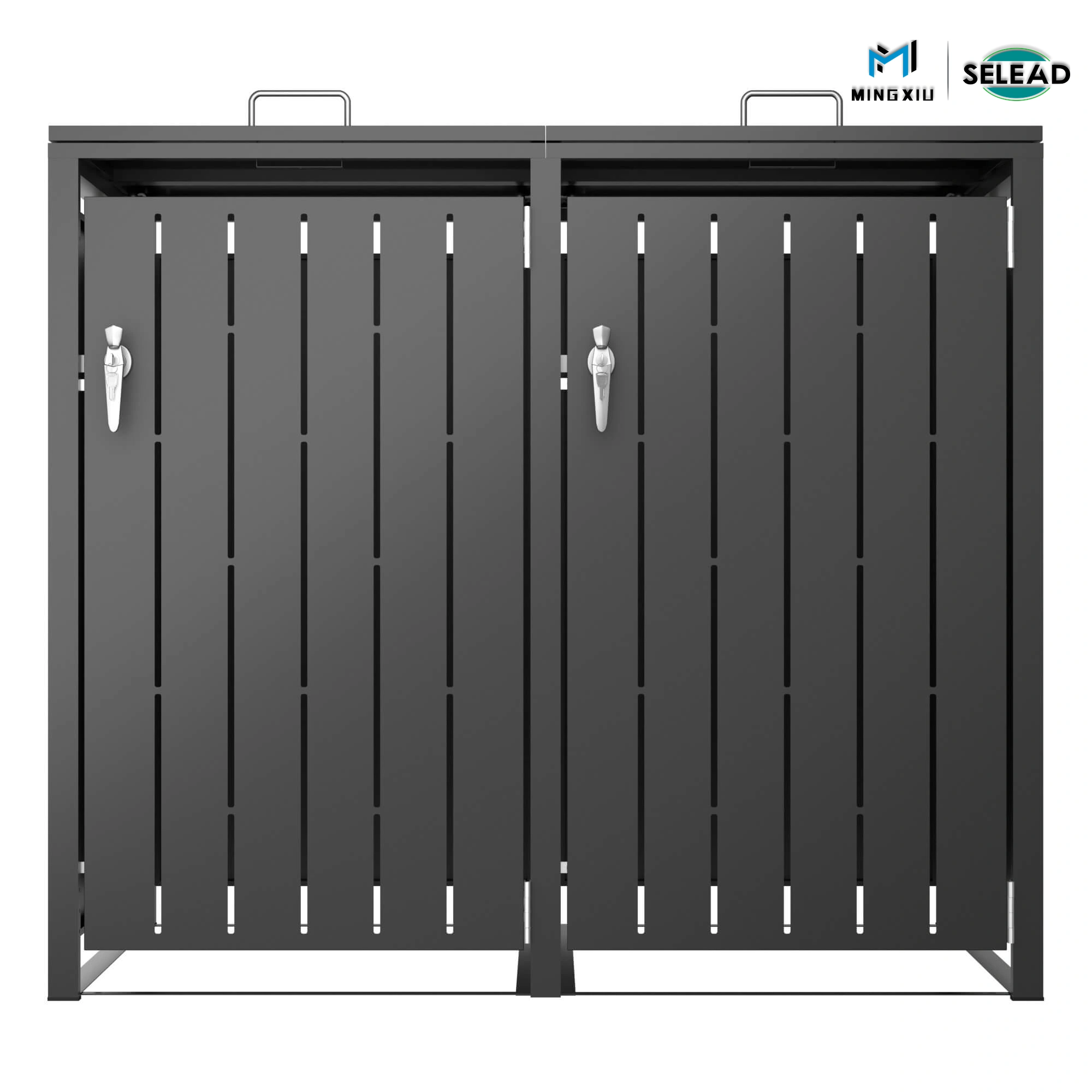
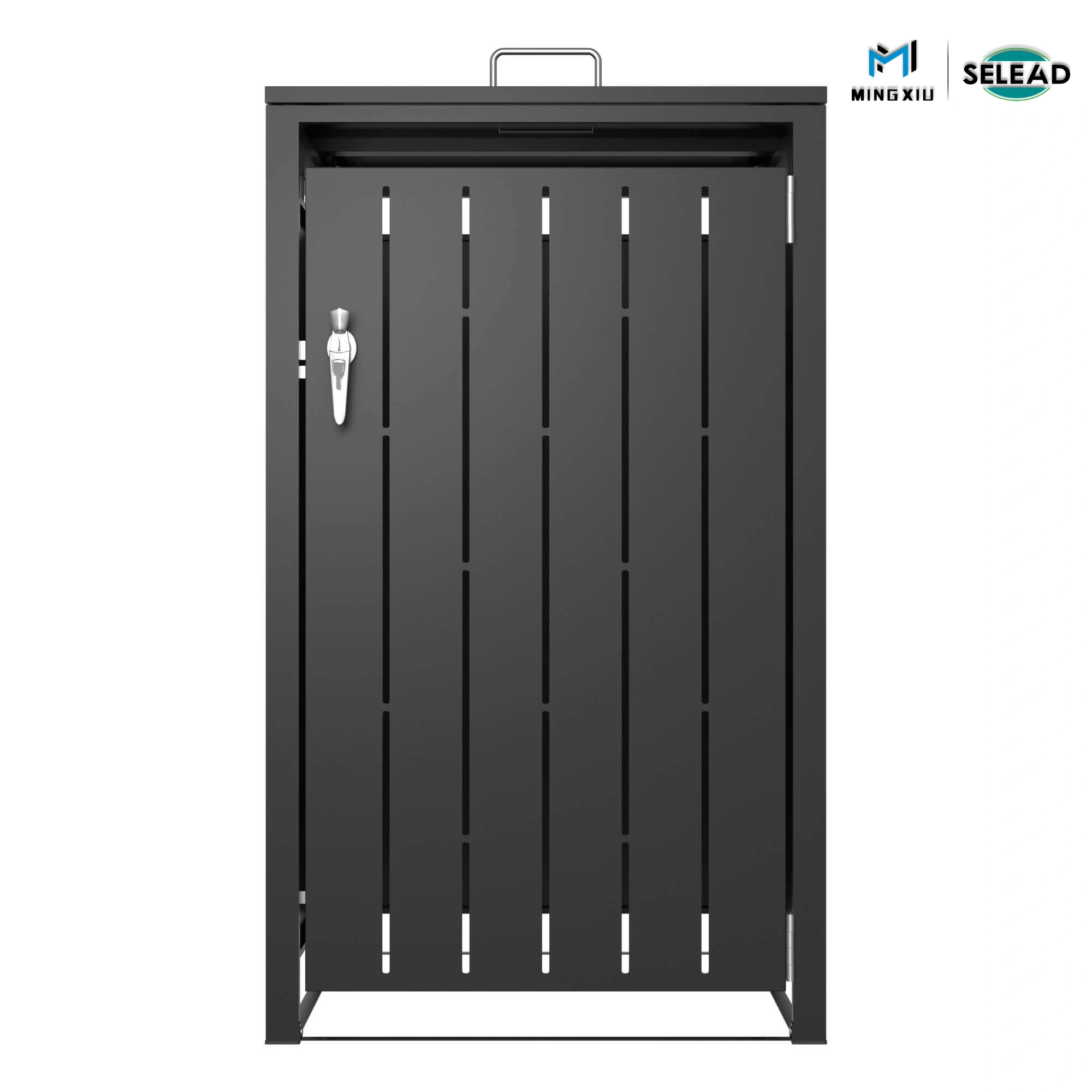
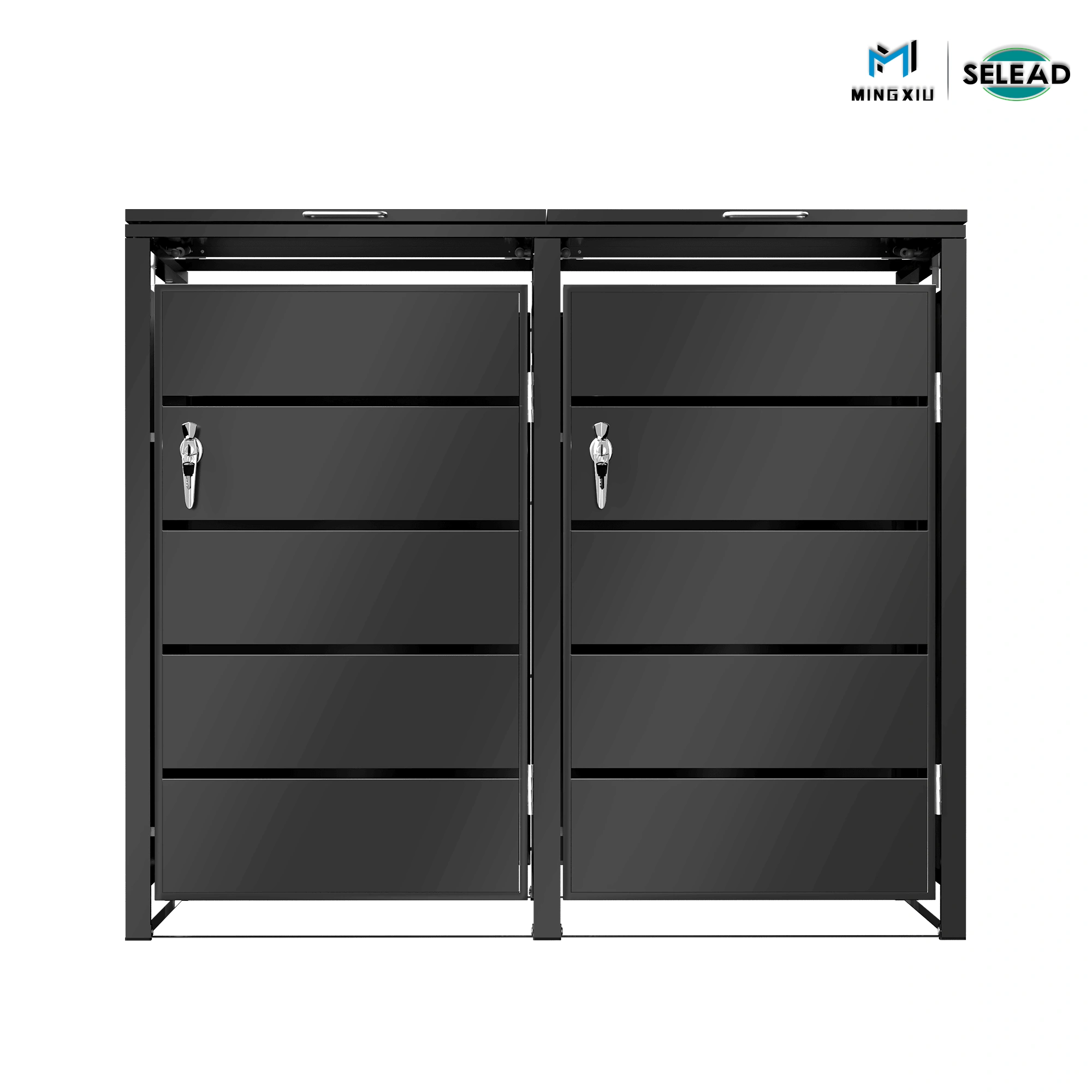
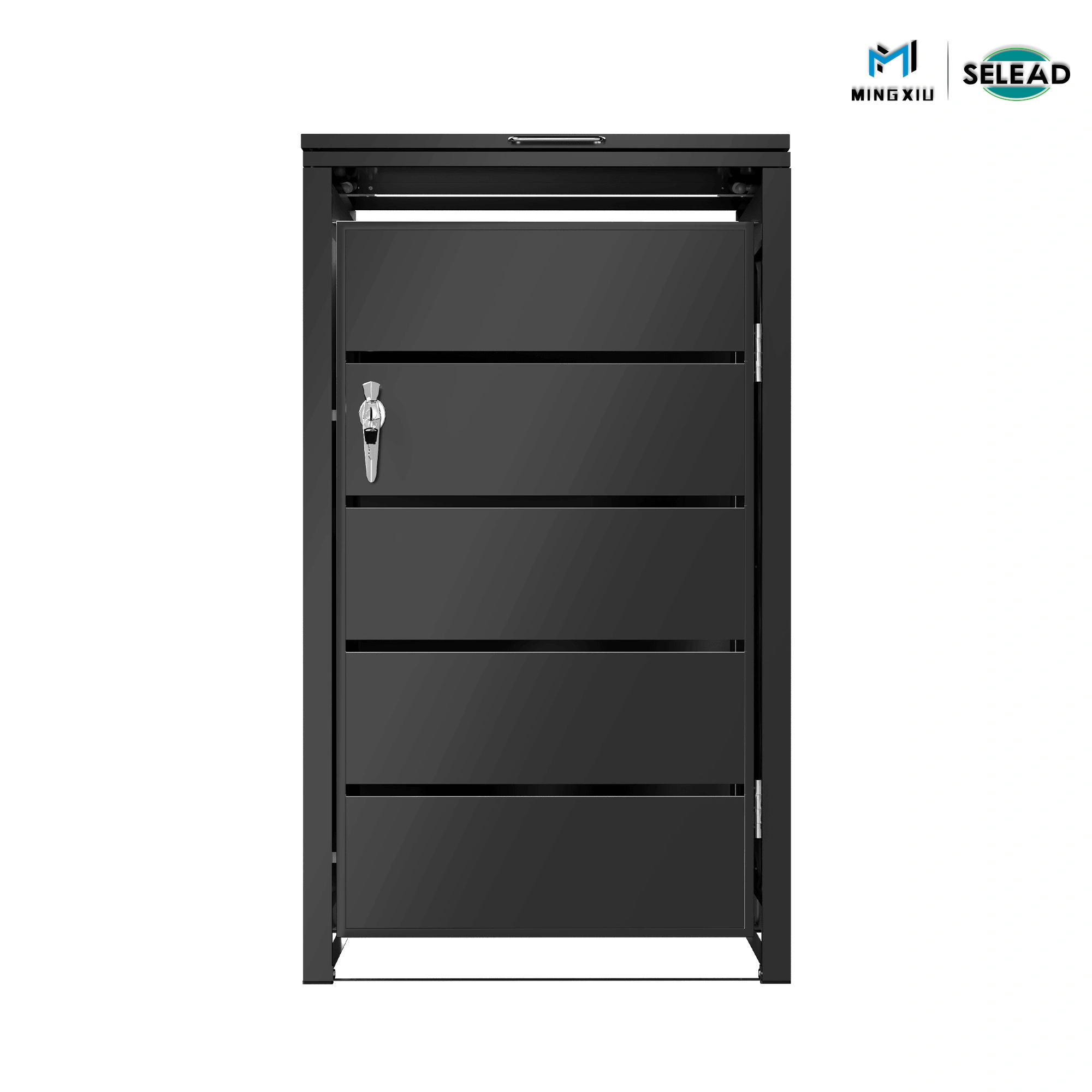
A metal outdoor bin enclosure addresses all of these problems at once. It keeps bins organised, shields them from weather, prevents animal access, improves appearance, and reduces fire risk — functioning as essential waste management infrastructure rather than a decorative add-on.
Not all outdoor bin storage performs equally over time, especially in the UK climate. The table below compares the three most common material choices:
| Performance Factor | Plastic Bin Store | Timber Enclosure | Powder-Coated Steel Enclosure |
|---|---|---|---|
| Weather resistance | Low — UV degrades plastic; softens and warps in heat | Moderate — requires regular treatment against rot and moisture | High — galvanized steel with weatherproof powder coating |
| Pest resistance | Moderate — seams can be breached by rodents | Moderate — joints harbour insects | High — sealed seams, secure latching, no pest entry points |
| Fire safety | Low — flammable material | Low — combustible | High — non-combustible, important near buildings |
| Multi-bin capacity | Usually 1-2 bins maximum | Custom sizes possible | Custom sizes; 2-4 bin configurations available |
| Lifespan | 3-5 years | 5-8 years with maintenance | 10+ years |
| Total cost over 10 years | Medium — requires replacement | Medium-high — ongoing maintenance cost | Lowest — one-time purchase with no recurring maintenance |
For households managing multiple recycling streams, capacity is the deciding factor. A single-bin store that holds one 240-litre wheelie bin may have been sufficient under the old two-bin system. Under Simpler Recycling, multi-bin enclosures that accommodate three or four containers offer a more practical long-term solution.
If you are considering an outdoor enclosure for your recycling and waste bins, these features separate a well-designed product from a basic box:
Looking for a multi-bin outdoor enclosure that handles the new recycling rules?
Our galvanized steel bin enclosures are built for UK weather — ventilated, lockable, and available in configurations for two to four wheelie bins plus food caddy storage.
Request SpecificationsYes — but enforcement is usually a last resort. Most councils begin by rejecting the collection or tagging the bin with a warning notice explaining the contamination issue. Repeated or deliberate misuse can escalate to fixed penalty notices. Businesses face stricter obligations, including mandatory separation of dry recyclables, food waste, and residual waste under commercial waste regulations.
Using the correct bin, rinsing containers, and keeping food waste separate from dry recycling are the three simplest steps to avoid collection rejection and potential penalties. A well-organised outdoor bin storage area — with clearly labelled containers and a designated location for each waste stream — makes correct sorting easier for everyone in the household.
The person or business producing the waste is legally responsible for sorting it correctly before collection. Waste collectors must be registered on the public register of authorised carriers; using an unlicensed collector creates legal liability for the waste producer.
Q: What is a recycling bin and how is it different from a general waste bin?
A recycling bin is designated for materials that can be reprocessed: paper, cardboard, plastic containers, metal cans, and glass. A general waste bin is for non-recyclable rubbish such as contaminated packaging, nappies, and broken household items. The two should never be mixed — contamination in a recycling bin can cause the entire load to be rejected at the sorting facility.
Q: Are recycling bin colours the same across the UK?
No. Bin colours are set by each of the 300-plus local authorities in England and are not standardised nationally. A blue bin commonly means recycling, but in some council areas it means general waste. Always check the printed label on the bin and your local council website rather than relying on colour.
Q: How many bins will I need under the 2026 recycling rules?
Under the Simpler Recycling framework effective from 31 March 2026, most English households need at least four containers: general waste, dry recyclables, paper and card, and food waste. If you subscribe to garden waste collection, that adds a fifth container. The exact configuration depends on your local council's implementation.
Q: What happens if I put the wrong item in my recycling bin?
The bin may not be collected. Councils typically tag the bin with a warning notice explaining the contamination. Repeated or deliberate misuse can lead to fixed penalty notices. Common contaminants include greasy pizza boxes, food residue on containers, black plastic bags, textiles, and nappies.
Q: Why do I need a bin enclosure when I already have bins?
Bins left exposed to weather, animals, and wind create hygiene, safety, and appearance problems. A metal bin enclosure protects bins from damage, prevents animal access, reduces odour by providing shade, keeps the property tidy, and reduces fire risk. With four to five bins per household under the new recycling rules, organised storage is no longer optional for many homes.
Q: Can I store food waste caddies in a bin enclosure?
Yes — and it is recommended. A ventilated metal enclosure provides shade, reduces heat build-up that accelerates decomposition, and prevents animals from accessing food waste containers. Look for enclosures with integrated ventilation grilles to manage condensation and odour.
Q: Do bin enclosures work for rental properties and multi-unit buildings?
Yes. For landlords, property managers, and developers, communal outdoor storage solutions that consolidate multiple waste and recycling containers into one managed area reduce complaints, improve kerb appeal, and support recycling compliance across all units. Multi-bin steel enclosures are increasingly specified in new-build planning applications.
Q: How does the UK recycling rate compare to other European countries?
The UK recycled 75.2 percent of packaging waste in 2024, but overall household recycling rates in England (around 44 percent) lag behind leaders like Germany and Austria (above 60 percent). The Simpler Recycling reforms aim to close this gap by making separation more consistent and accessible. Convenience — including having well-organised bin storage — consistently correlates with higher participation and sorting accuracy.
A recycling bin is not defined by its colour. It is defined by the waste stream it collects, the council that services it, and — increasingly — the household's ability to store it properly between collections. The Simpler Recycling framework, now in force across England, has made four-container systems the default. Food waste collections are now weekly and mandatory. The number of outdoor containers per household has grown, and with it, the need for practical storage solutions.
A durable metal bin enclosure — ventilated, lockable, weather-resistant, and sized for multiple containers — addresses the practical side of recycling that is too often overlooked. It keeps bins organised, protected from weather and animals, and out of sight. It supports compliance by making correct sorting easier. And it reduces the daily friction that leads households to abandon recycling because the bins have become a nuisance.
For councils, developers, and property managers specifying outdoor storage for new-builds and refurbishments, the same logic applies at scale. A well-designed bin storage area is not a luxury. It is part of the infrastructure that makes modern recycling work — for households, for communities, and for the environment.
Need a multi-bin outdoor enclosure for your home or development?
Selead manufactures powder-coated galvanized steel bin enclosures in configurations for two to four wheelie bins — built for UK weather and designed with ventilation, secure latching, and easy access for collection crews. ISO 9001 certified.
Get a QuoteLuoyang Selead Office Furniture Co., Ltd. is a steel furniture manufacturer with over 15 years of export experience, ISO 9001 certified, serving buyers across the UK, Europe, and global markets. We manufacture outdoor metal bin enclosures, garden storage boxes, parcel cabinets, bike sheds, and mailboxes in powder-coated galvanized steel — designed to perform in all weather conditions and support modern multi-stream recycling systems. Contact our team for MOQ, catalog, and product specifications.
Heatwave Bin Collection Changes 2026: How UK Households Can Keep Waste Secure During Extreme Heat
No hay artículo siguiente