
News Center
Published: 2025-12-05 14:22:00 Source: Luoyang Selead Office Furniture Co,.Ltd.
The global office storage and organization market is valued at USD 13,875.42 million in 2024 and is projected to reach USD 23,790.87 million by 2032, growing at a CAGR of 7.15%[1]. Selecting the right office storage cabinet requires understanding material properties, load capacities, industry standards, cost implications, and organizational needs. This comprehensive guide provides professional insights into material selection, dimensional specifications, safety standards, and sustainability considerations to optimize office space utilization and productivity.
Need Expert Guidance? Contact Selead via WhatsApp for personalized cabinet solutions tailored to your specific office requirements and budget.
The office storage cabinet market represents a critical segment of workplace infrastructure. Market growth is driven by hybrid work models, increased emphasis on space optimization, and evolving ergonomic standards[1][2]. Companies are investing significantly in storage solutions to maximize productivity, reduce document clutter, and support both collaborative and individual work environments. The shift toward open-plan offices with increased collaborative space has created heightened demand for flexible, modular storage solutions[3].
Office storage cabinets are manufactured from four primary materials, each offering distinct performance characteristics and trade-offs. Understanding these material properties is essential for selecting cabinets that meet specific operational requirements, durability standards, and aesthetic preferences[4][5].
| Material | Durability | Load Capacity | Aesthetics | Investment Level | Best For |
|---|---|---|---|---|---|
| Steel | Highest (20-30 yrs) | Heavy duty | Utilitarian | Premium | High-traffic offices, security-critical |
| Wood/Laminate | High (15-25 yrs) | Medium duty | Professional/Warm | Moderate | Executive offices, aesthetics priority |
| Aluminum | Medium (10-20 yrs) | Light to medium | Modern/Lightweight | Budget-Friendly | Mobile cabinets, cost-conscious |
Steel Filing Cabinets: Commercial-grade steel cabinets represent the industry standard for demanding office environments. Heavy-gauge steel construction provides unmatched strength and security. Steel cabinets with welded frames and reinforced drawer slides support substantial storage loads suitable for dense document archives. Modern powder-coated finishes provide exceptional resistance to scratches, chemicals, and UV fading. Steel cabinets are rated for 20-30 years of continuous use with minimal maintenance[6]. For specific load capacity and specifications tailored to your office volume, contact Selead via WhatsApp.
Wood and Laminate Cabinets: Wood cabinets offer aesthetic advantages and professional appearance suitable for executive offices and client-facing areas. Solid wood construction maintains superior repairability. However, wood cabinets have lower load capacities compared to steel and are susceptible to warping, moisture damage, and pest infiltration in humid environments[7]. Engineered wood and laminate options provide cost-effective alternatives with moderate durability and better resistance to environmental factors than solid wood.
Aluminum Cabinets: Lightweight aluminum construction offers balance between cost and performance. Aluminum resists corrosion and maintains consistent appearance without finish degradation. Load capacities typically support standard office document storage. Aluminum cabinets are popular for mobile storage solutions and budget-conscious installations. Expected lifespan is 10-20 years depending on environmental conditions and usage intensity.
| Performance Factor | Steel | Wood/Laminate | Aluminum |
|---|---|---|---|
| Structural Integrity | Excellent | Very Good | Good |
| Scratch Resistance | Excellent | Good | Very Good |
| Moisture Resistance | Excellent | Good | Excellent |
| Fire Protection | Excellent (UL rated) | Poor | Fair |
| Repairability | Fair | Excellent | Good |
Office storage cabinets are classified into five primary configuration types, each optimized for specific storage requirements and space utilization patterns[6][8]:
| Cabinet Type | Configuration | Storage Capacity | Ideal Application |
|---|---|---|---|
| Vertical Files | Narrow depth, stacked drawers | Compact | Compact spaces, high-volume document storage |
| Lateral Files | Side-to-side drawer opening | Large | Mixed document/supply storage, standard offices |
| Pedestals | Desk-mounted or floor units | Personal | Desk-mounted, personal storage, frequently accessed files |
| Storage Towers | Modular with adjustable shelving | Very Large | Modular systems, flexible configurations, space dividers |
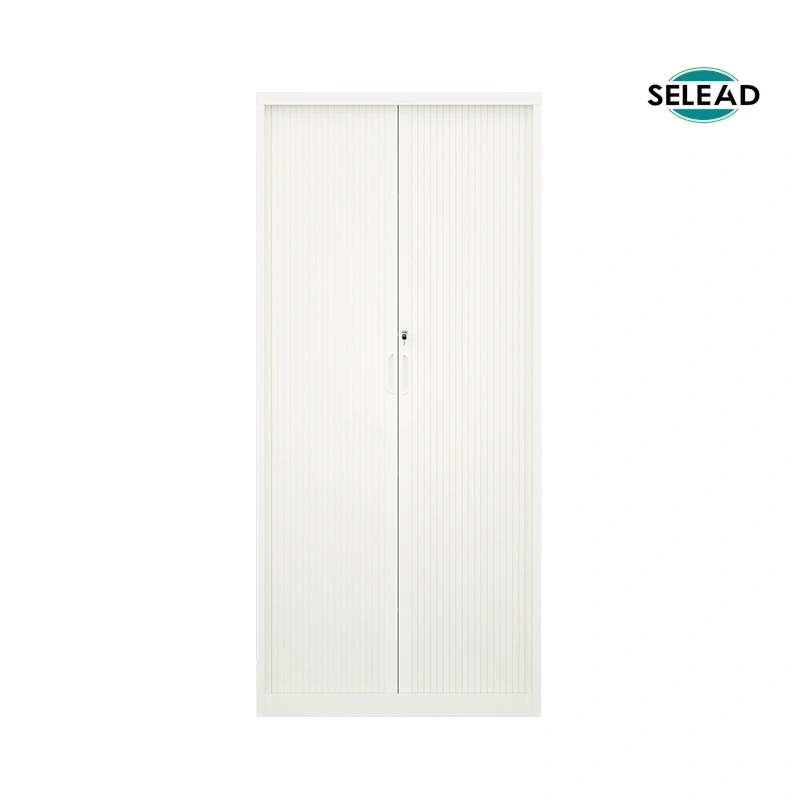
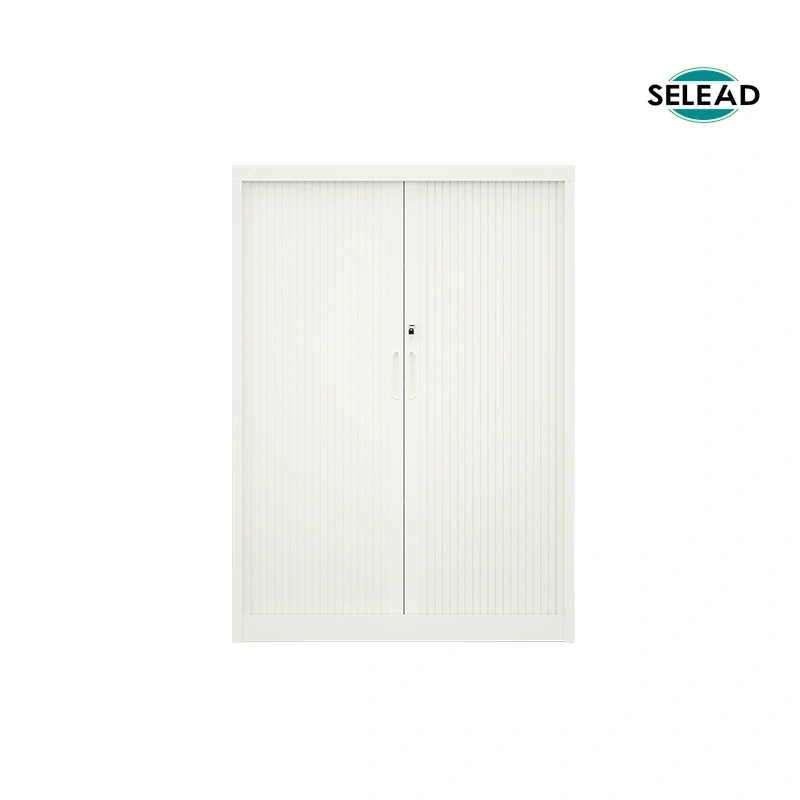
| Wardrobe Cabinets | Dual door, open interior | Mixed storage | Equipment storage, supplies, archives, large items |
Vertical File Cabinets: Designed for depth-prioritized storage, vertical files maximize floor space efficiency with narrow footprints. These cabinets are ideal for compact offices with limited floor space. Vertical configuration limits accessibility compared to lateral designs.
Lateral File Cabinets: Industry-standard configuration featuring side-to-side drawer opening and full-width access. Lateral files accommodate both traditional document files and larger box storage, making them versatile for mixed-content archives. This configuration offers optimal accessibility and efficiency for standard office operations.
Pedestals: Compact units designed for desk mounting or floor placement. Used for personal document storage, frequently accessed files, and office supplies. Pedestals are often used as components of larger modular systems, providing flexibility in office layout design.
Storage Towers: Modular units combining benefits of lateral files with versatility for general storage. Adjustable shelving and door options provide customization. Popular in open office environments where they function as space dividers while providing storage capacity. These systems allow companies to adapt storage as needs evolve.
Need configuration recommendations? Message Selead on WhatsApp for personalized suggestions based on your specific space and storage requirements.
The ANSI/BIFMA X5.9-2019 Storage Units standard establishes comprehensive testing protocols and minimum performance requirements for commercial office furniture[9]. Standard load classifications define test weights and conditions that cabinets must withstand. ANSI-BIFMA load categories include:
| Load Classification | Capacity Level | Typical Usage | Suitability |
|---|---|---|---|
| Class 1 (Light) | Entry-level capacity | Occasional use | Office supplies, light documents |
| Class 2 (Medium) | Standard capacity | Regular use | Standard office files, mixed content |
| Class 3 (Heavy) | Maximum capacity | Heavy daily use | Archives, dense files, industrial settings |
ANSI-BIFMA X5.9-2019 establishes minimum performance standards ensuring stability when drawers are fully opened. Cabinets must pass drop tests, cycle tests (minimum 100,000 cycles), and tipping tests. All shelves must maintain proper alignment when loaded to rated capacity. These standards ensure 10+ year service life with minimal maintenance[9].
Selecting the appropriate load classification for your office? Each organization's document volume and access patterns differ significantly. Consult Selead specialists on WhatsApp to assess your specific load requirements and identify the optimal cabinet classification.
Professional office storage cabinets incorporate multiple security and safety features designed to protect sensitive documents and ensure workplace safety[6][10]:
| Security Feature | Description | Protection Level | Ideal For |
|---|---|---|---|
| Central Locking | Single lock controls all drawers/doors | High | Confidential documents, records |
| Multi-Point Locking | Lock engages multiple positions | Very High | High-security applications, industrial |
| Anti-Tipping Mechanism | Prevents simultaneous multiple drawer opening | Medium-High | Safety-conscious offices, schools, facilities with mobility considerations |
| Smooth Operation Slides | High-quality drawer slides with balance | Medium | Heavy-load applications, ergonomics, user safety |
| Fire Rating | UL classified fire protection certified | Very High | Legal records, irreplaceable documents, compliance requirements |
Anti-Tipping Technology: Modern cabinets feature mechanisms that prevent simultaneous opening of multiple drawers, significantly reducing tipping risks when compared to non-equipped cabinets. This is critical for tall units in offices with children or elderly employees. Smooth-operation drawer slides require minimal force, reducing workplace injuries from repetitive strain.
Fire-Rated Cabinets: UL-classified fire-rated cabinets provide multiple protection rating levels. These specialized cabinets use insulated materials and are tested per industry standards. Fire-rated protection is essential for archival records, legal documents, and compliance requirements in regulated industries. Fire-rated cabinets can prevent document loss valued at significant amounts in many organizations.
Total cost of ownership (TCO) extends beyond initial purchase price to include maintenance, replacement cycles, and operational efficiency gains. Understanding TCO is essential for justifying cabinet investments and optimizing budget allocation[2].
| Cabinet Type | Initial Investment | Long-term Value | Expected Lifespan | Maintenance Level |
|---|---|---|---|---|
| Heavy-Gauge Steel | Premium | Highest | 20-30 years | Minimal |
| Mid-Grade Steel | Moderate | High | 15-25 years | Low |
| Wood/Laminate | Moderate | Medium | 12-18 years | Moderate |
| Aluminum | Budget-Friendly | Medium | 10-15 years | Low |
High-quality steel provides superior long-term value despite higher initial investment[11]. While initial investment may be higher, reduced maintenance requirements and extended lifespan create significant long-term savings. Each organization's financial situation differs. Connect with Selead on WhatsApp to discuss pricing, financing options, and ROI analysis specific to your office requirements.
Environmental impact assessment has become essential in furniture procurement. Organizations increasingly prioritize sustainable cabinet solutions to reduce carbon footprint and align with corporate ESG (Environmental, Social, Governance) commitments[12]. Key sustainability metrics include material composition, manufacturing emissions, end-of-life recyclability, and indoor air quality certifications.
Steel Sustainability: Steel offers exceptional recyclability. Approximately 85% of steel furniture is recovered and recycled at end-of-life. Recycled steel content in new cabinets ranges from 25-75% depending on manufacturer, reducing embodied carbon by 30-50%. Powder-coated steel finishes contain zero volatile organic compounds (VOCs), improving indoor air quality. Steel cabinets with GREENGUARD Gold certification meet stringent off-gassing standards, making them suitable for health-conscious office environments, schools, and healthcare facilities[12][13].
Wood and Laminate Sustainability: FSC (Forest Stewardship Council) certified wood ensures responsible forestry practices. Engineered wood and laminate options use recycled wood fibers, reducing landfill waste. However, laminate adhesives may contain formaldehyde. Low-emission or formaldehyde-free options provide premium sustainability features. End-of-life wood disposal varies regionally; approximately 20-30% is recovered for recycling or energy generation.
Certifications and Standards: GREENGUARD Gold and GREENGUARD for Children certifications verify low-emitting products suitable for sensitive environments. LEED certification credit for recycled content applies to cabinets with significant recycled material percentages. ISO 14001 environmental management certification indicates manufacturers implementing systematic sustainability practices. These certifications provide documentation for green building compliance and supply chain transparency[12].
Selecting optimal office storage cabinets requires evaluating multiple factors against organizational priorities. The following matrix provides structured guidance for decision-making[14]:
| Decision Factor | Priority Weight | Steel Cabinets | Wood Cabinets | Aluminum Cabinets |
|---|---|---|---|---|
| High Traffic and Durability | High | Excellent | Very Good | Good |
| Security Requirements | High | Excellent | Fair | Good |
| Aesthetic/Professional Image | Medium | Good | Excellent | Very Good |
| Budget Constraints | Medium-High | Good | Very Good | Excellent |
| Sustainability and Green Certification | Medium | Excellent | Very Good | Good |
| Mobility and Flexibility | Medium | Fair | Fair | Excellent |
| Fire and Archival Protection | Low-Medium | Excellent | Poor | Fair |
Selead specializes in customized storage solutions tailored to your specific needs, budget, and office environment.
Expert consultation on materials, configurations, pricing and customization.
Selecting appropriate office storage cabinets requires comprehensive analysis of organizational requirements, physical specifications, regulatory compliance needs, and total cost considerations. The global office storage market expansion to USD 23.8 billion by 2032 (7.15% CAGR) reflects growing recognition of storage solutions' importance in optimizing workplace productivity[1].
Selection Guidance by Priority:
Implementation best practices include: (1) conducting space audits to determine cabinet quantities and configurations, (2) verifying selections meet applicable industry standards, (3) establishing vendor evaluation criteria including warranty coverage and service support, (4) coordinating with office design teams to integrate cabinets with workspace layout, and (5) developing maintenance schedules. Organizations implementing comprehensive storage solutions experience significant productivity improvements through reduced document search time and improved space organization[2].
Selead provides professional-grade storage solutions designed for modern office environments. Our expertise spans material selection, space optimization, custom configurations, and long-term value delivery.
Share your office specifications and requirements. We will provide personalized recommendations and pricing.
[1] Future Market Report. (2025). Office Storage and Organization Market Size, Share, Growth. [Source](https://www.futuremarketreport.com/industry-report/office-storage-organization-market)
[2] Market Intelo. (2025). Office Storage Cabinet Market Research Report 2033. [Source](https://marketintelo.com/report/office-storage-cabinet-market)
[3] CBRE. (2025). Effective Spaces - Global Workplace and Occupancy Insights. [Source](https://www.cbre.com/insights/articles/effective-spaces)
[4] Office Furniture Online. (2025). Top 10 Office Storage Solutions for Better Workflow. [Source](https://officefurnitureonline.com/office-storage-solutions) rel="nofollow"
[5] Mefoman. (2025). The Complete Guide To Office Cabinets: Maximizing Storage. [Source](https://mefoman.com/the-complete-guide-to-office-cabinets/)
[6] Steelcase. (2024). Storage Specification Guide. [Source](https://www.steelcase.com/content/uploads/2024/02/storage-spec-guide.pdf)
[7] DZX Cabinet. (2025). Which is more durable: wooden or steel filing cabinets? [Source](https://www.dzxcabinet.com/which-is-more-durable-wooden-or-steel-filing-cabinets/)
[8] DirectOffice. (2023). Things To Keep In Mind While Choosing Office Storage Cabinet. [Source](https://directoffice.com/things-to-keep-in-mind-while-choosing-office-storage-cabinets/)
[9] ANSI/BIFMA X5.9-2019. (2019). Storage Units Standard. [Source](https://www.scribd.com/document/800883498/ANSI-BIFMA-X5-9-2019-STORAGE-UNITS)
[10] K-Log. (2025). Storage Cabinets Buying Guide. [Source](https://www.k-log.com/buying-guides/storage-cabinets) rel="nofollow"
[11] BTOD. (2025). How-To Find The Best File Cabinet For Your Office in 2025. [Source](https://www.btod.com/blog/buy-file-cabinets/)
[12] Office Furniture Plus. (2025). A Complete Guide To Buying Filing Cabinets For Your Office Space. [Source](https://www.officefurnitureplus.com/blog/a-complete-guide-to-choosing-good-filing-cabinets) rel="nofollow"
[13] UL Solutions. (2020). Furniture Safety Solutions. [Source](https://www.ul.com/industries/products-and-components/furniture/furniture-safety-solutions)
[14] CA Office Design. (2019). Filing Systems. [Source](https://caoffice.com/2019/06/11/filing-systems/)